Smart Choice
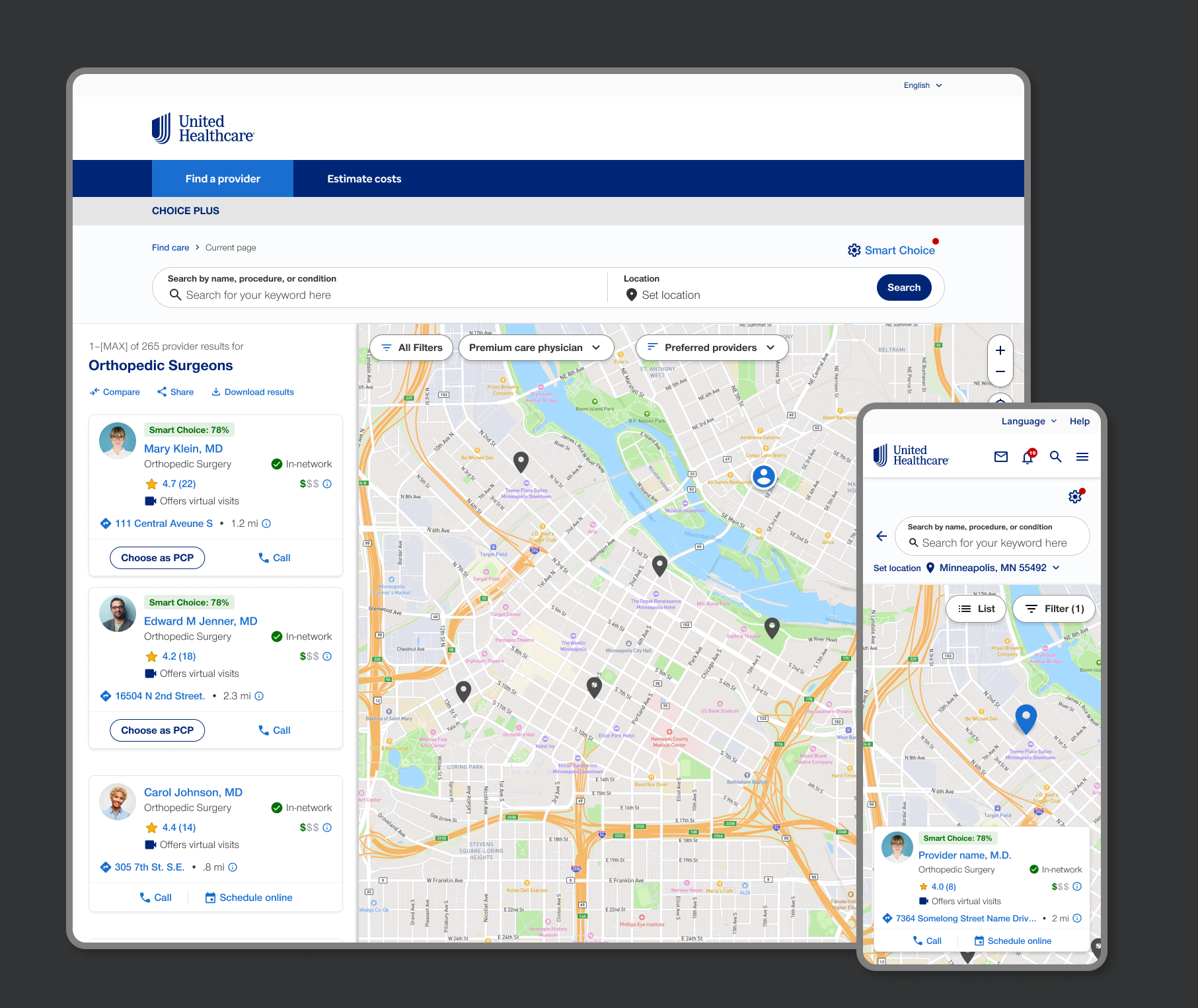
How do you get someone to trust an algorithm with their healthcare?
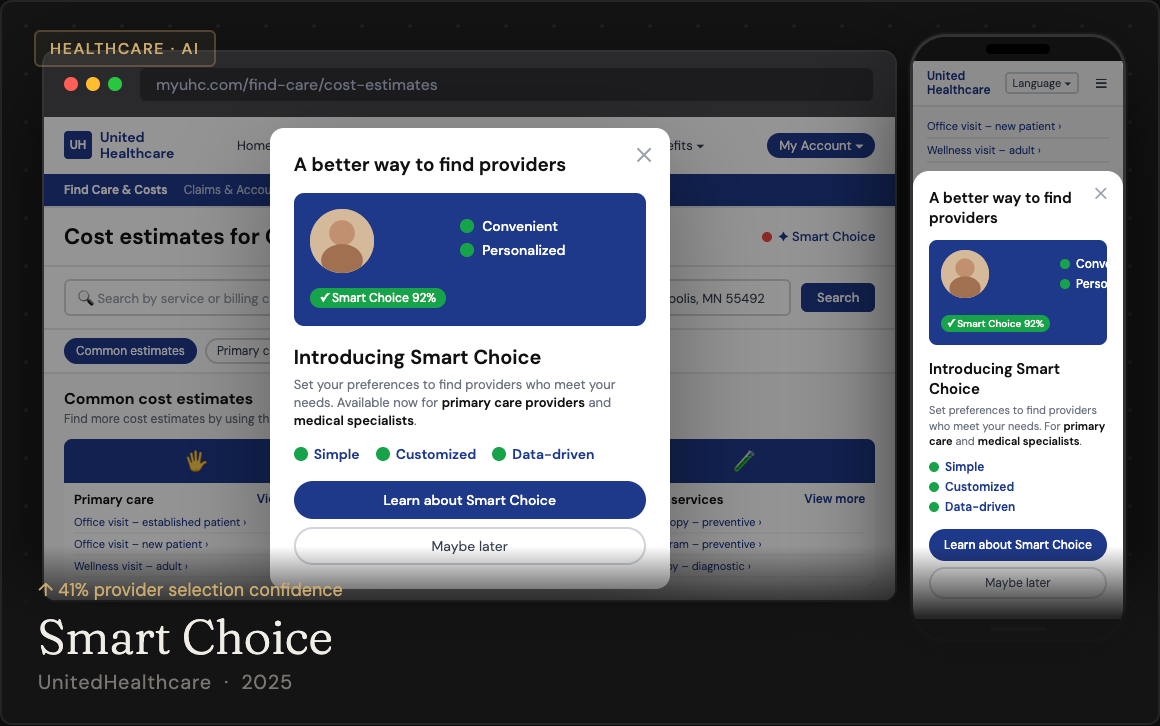
What I solved: Turned model outputs into a recommendation members could understand before choosing a provider.
Senior UX/UI Designer · AI Product Consultant
Designing end-to-end workflows and polished, accessible interfaces across healthcare, insurance, e-commerce, and AI.
12+ years · UX strategy · UI design · Enterprise healthcare · AI experiences
Open to remote Senior and Lead UX/UI opportunities
Selected healthcare work
How do you get someone to trust an algorithm with their healthcare?

What I solved: Turned model outputs into a recommendation members could understand before choosing a provider.
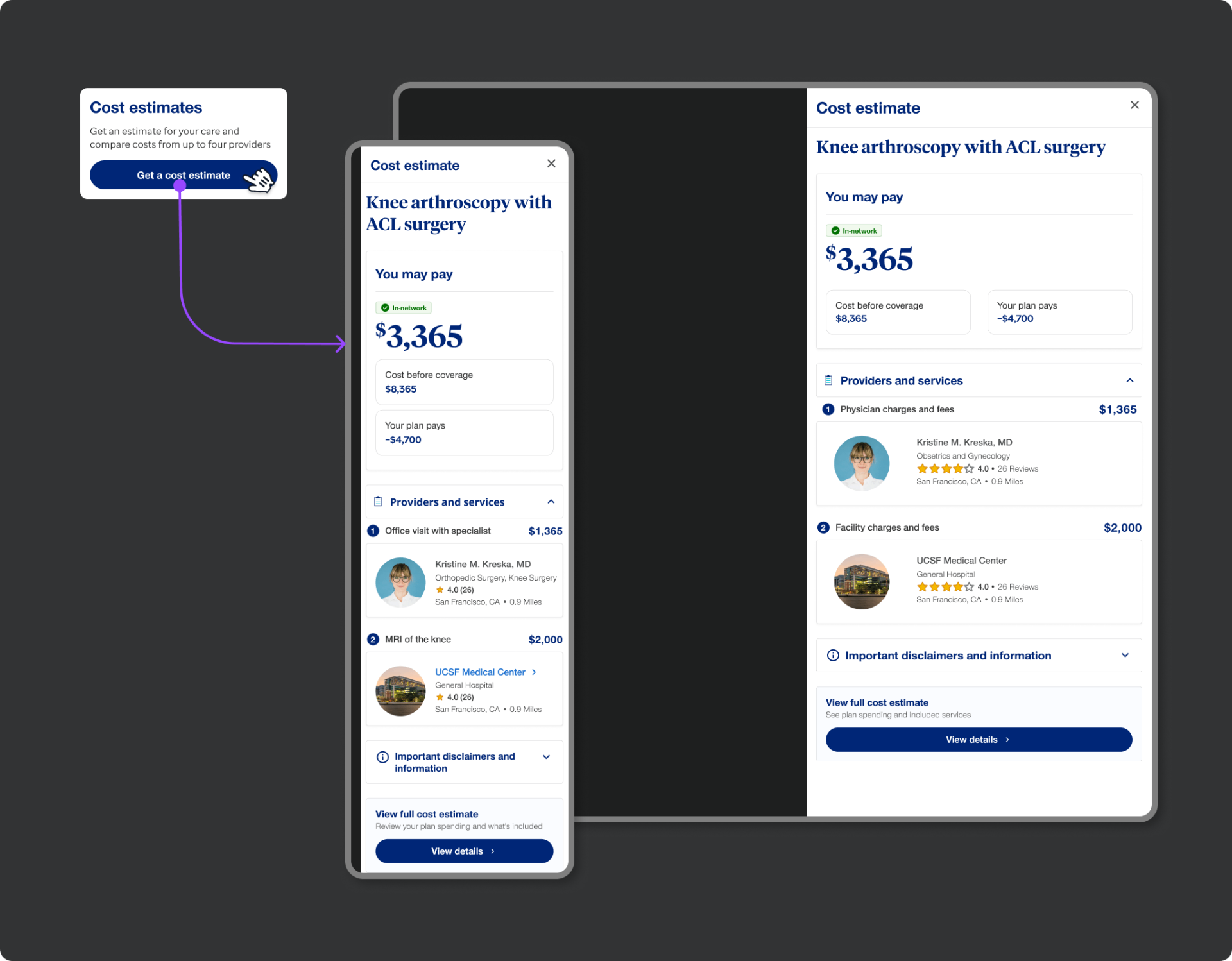
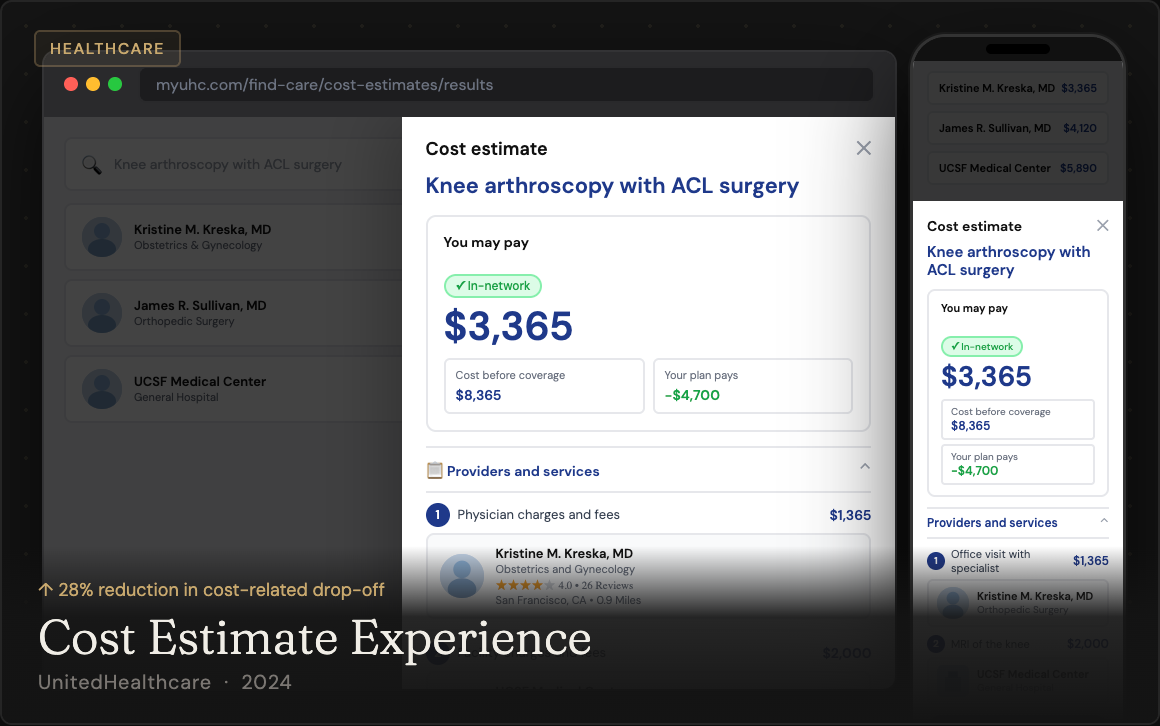
Cost information existed. Members abandoned the journey trying to find it.

What I solved: Moved cost information into the journey instead of sending members to a separate destination.
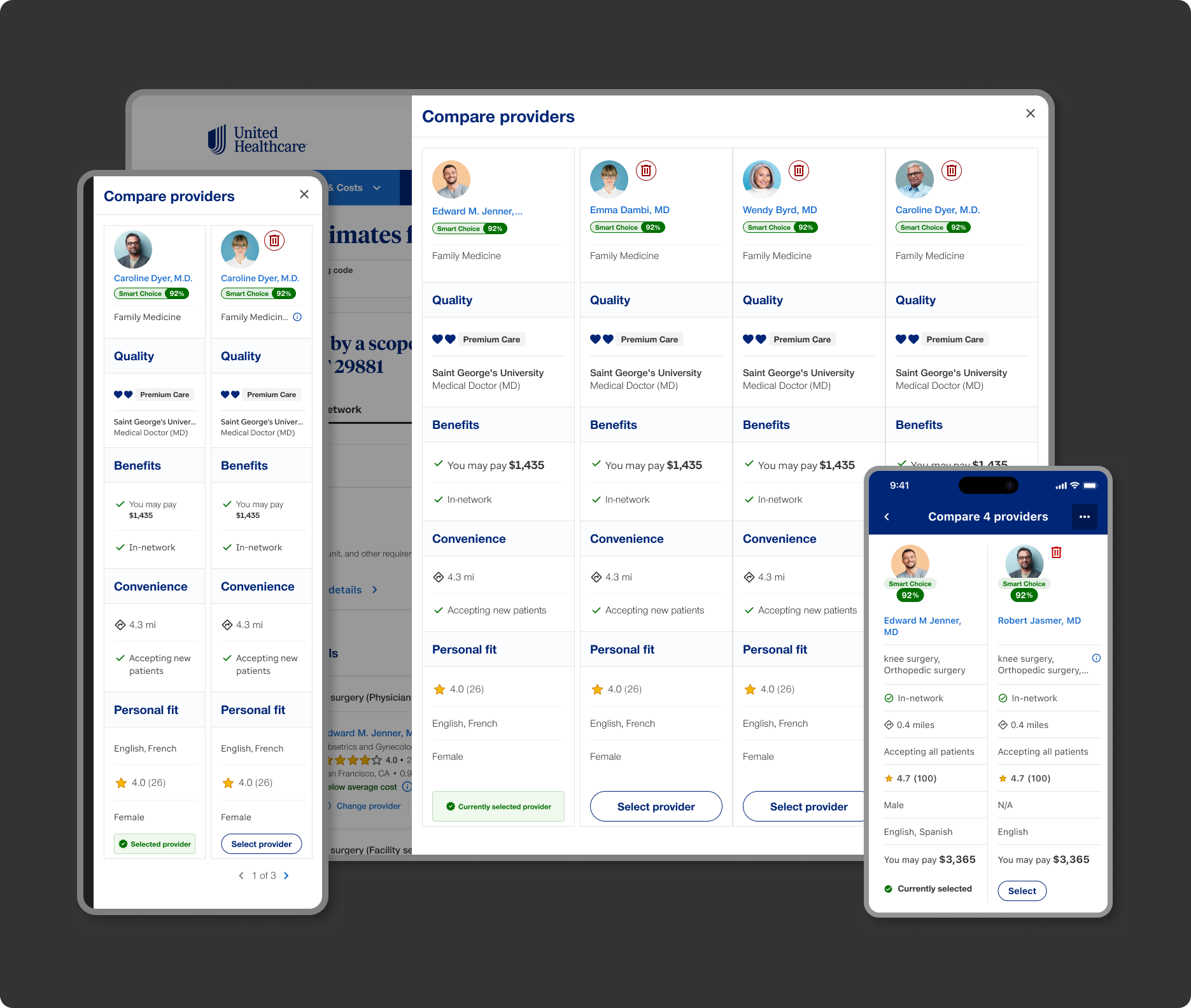
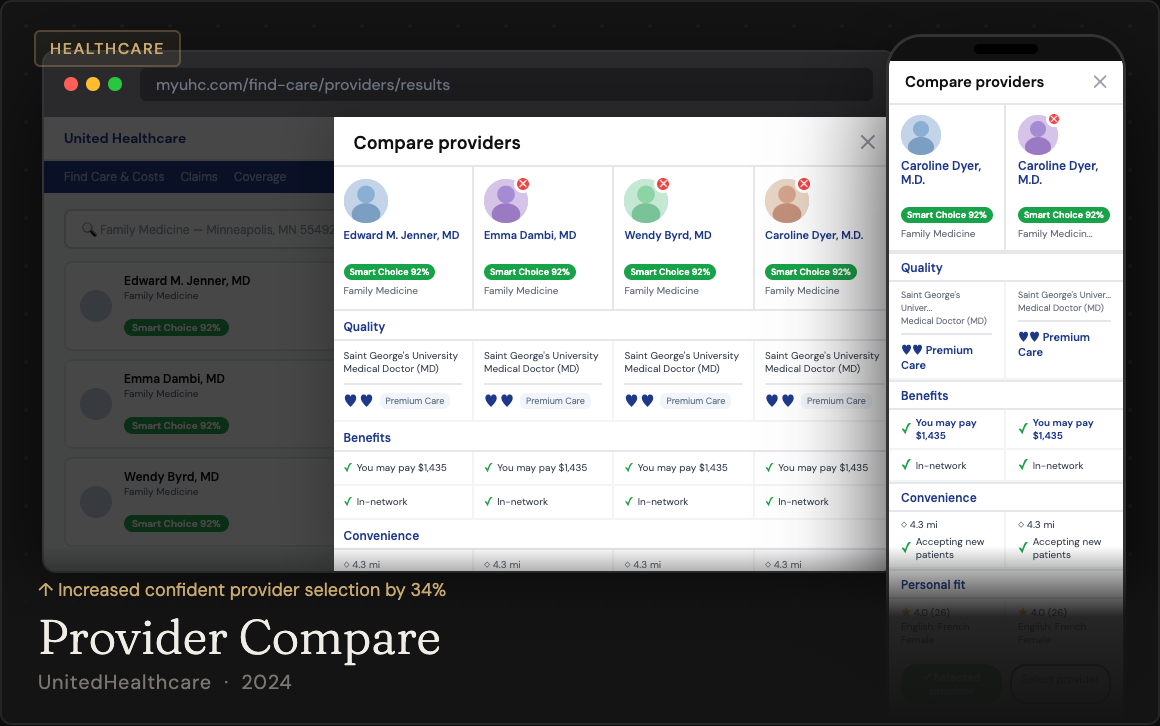
Four providers fit on desktop. Only two fit on mobile. That changed the entire product.

What I solved: Made dense provider comparison understandable when the available width was cut in half.
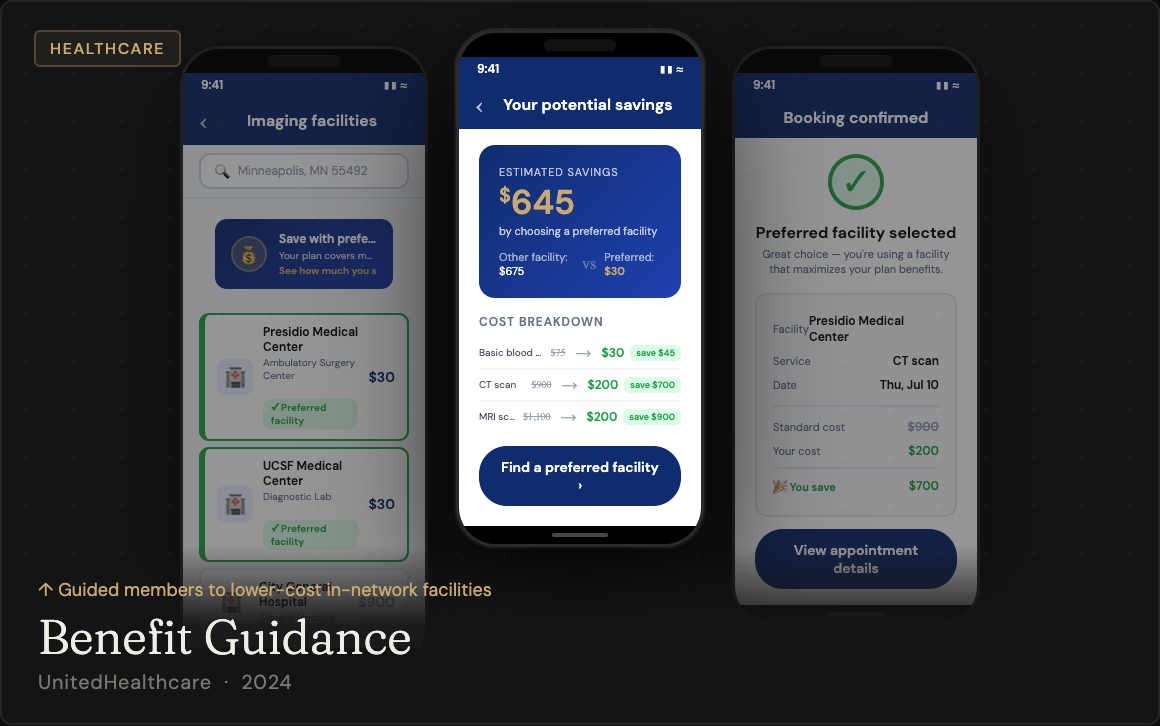
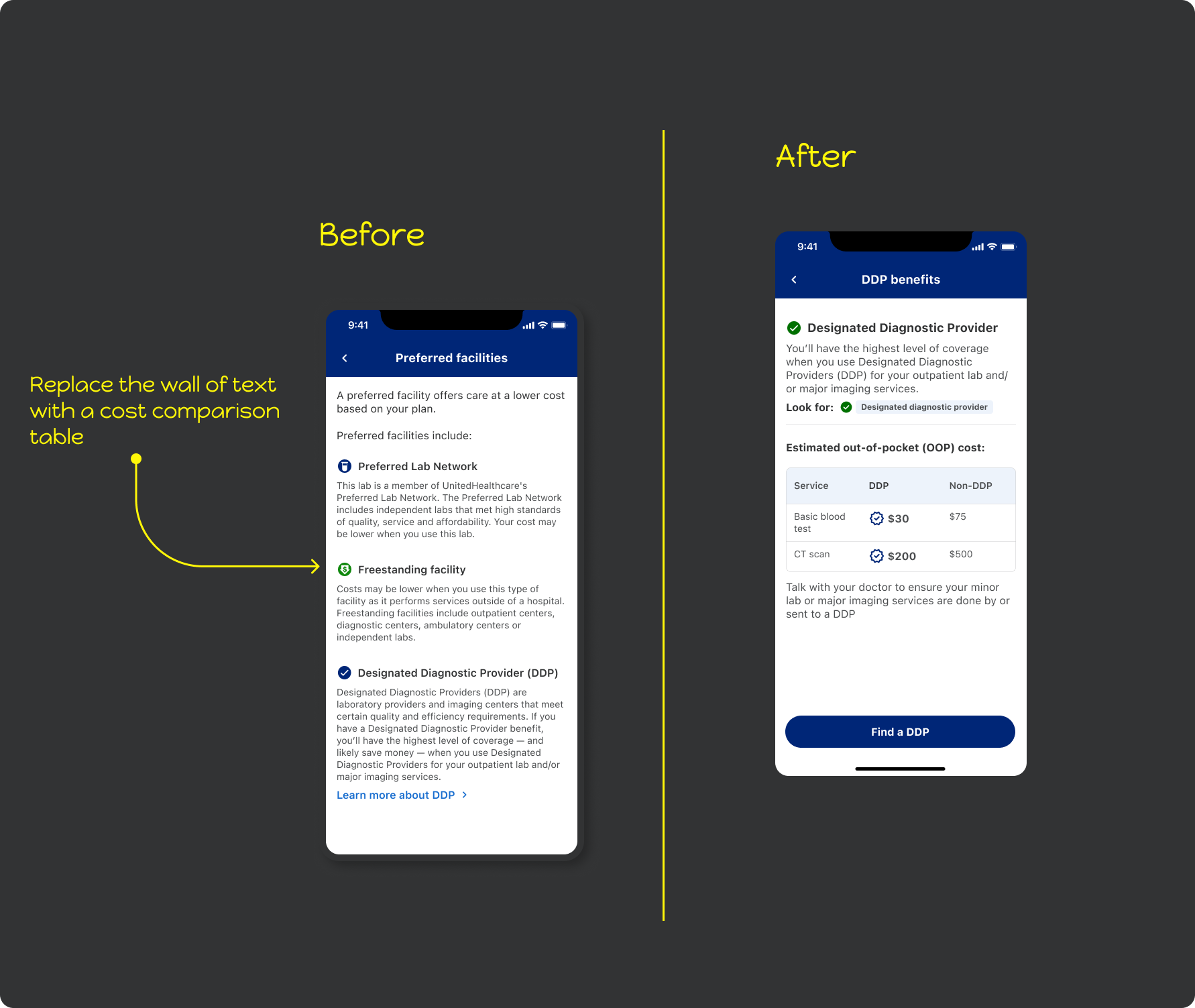
Members had benefits that could save them hundreds. Most didn’t know how to use them.

What I solved: Changed benefit education from a document to guidance at the moment of facility choice.
UX thinking · UI execution
I connect research, structure, interaction, and visual craft into complete experiences. Product design, design systems, and AI consulting support that core UX/UI practice.
More work by company
View the complete Optum / UnitedHealthcare collection →Insurance · Enterprise
Enterprise claims tooling — turning dense liability assessment into a workflow adjusters can trust.
View 2 projects →Direct-to-consumer · Community
Consumer commerce work focused on confidence after checkout, not just conversion at it.
View project →AI-native tools
AI-native product work — design systems, agentic workflows, and tools built with AI as a collaborator.
View project →About
I design the parts of healthcare that most people never notice—until they’re confused, lost, or charged the wrong amount. That’s where I work.
Working principles
Map the problem, people, and constraints before deciding.
Define the structure, flow, and decisions the experience needs.
Build realistic flows that are specific enough to test.
Find where the experience creates doubt or friction.
Release, measure, and refine with the team.